The paradox of choice, a concept coined by psychologist Barry Schwartz, suggests that while choice is essential for freedom and autonomy, too much choice can lead to anxiety, decision fatigue, and even dissatisfaction. This phenomenon is especially apparent in everyday situations, like shopping for wine in a supermarket. Imagine walking into a store with an aisle lined with hundreds of bottles of wine. You see countless varieties—red, white, rosé, sparkling, from different countries, with price ranges that span from affordable to luxury. At first, it might feel empowering to have so many options. But after a few minutes, the overwhelming array of possibilities begins to weigh on you.
Frag Vino uses your wine stock to suggest your customers the best wine for their occasion. Our AI knows the principles of recommending wine and applies them to your warehoused offer in seconds.
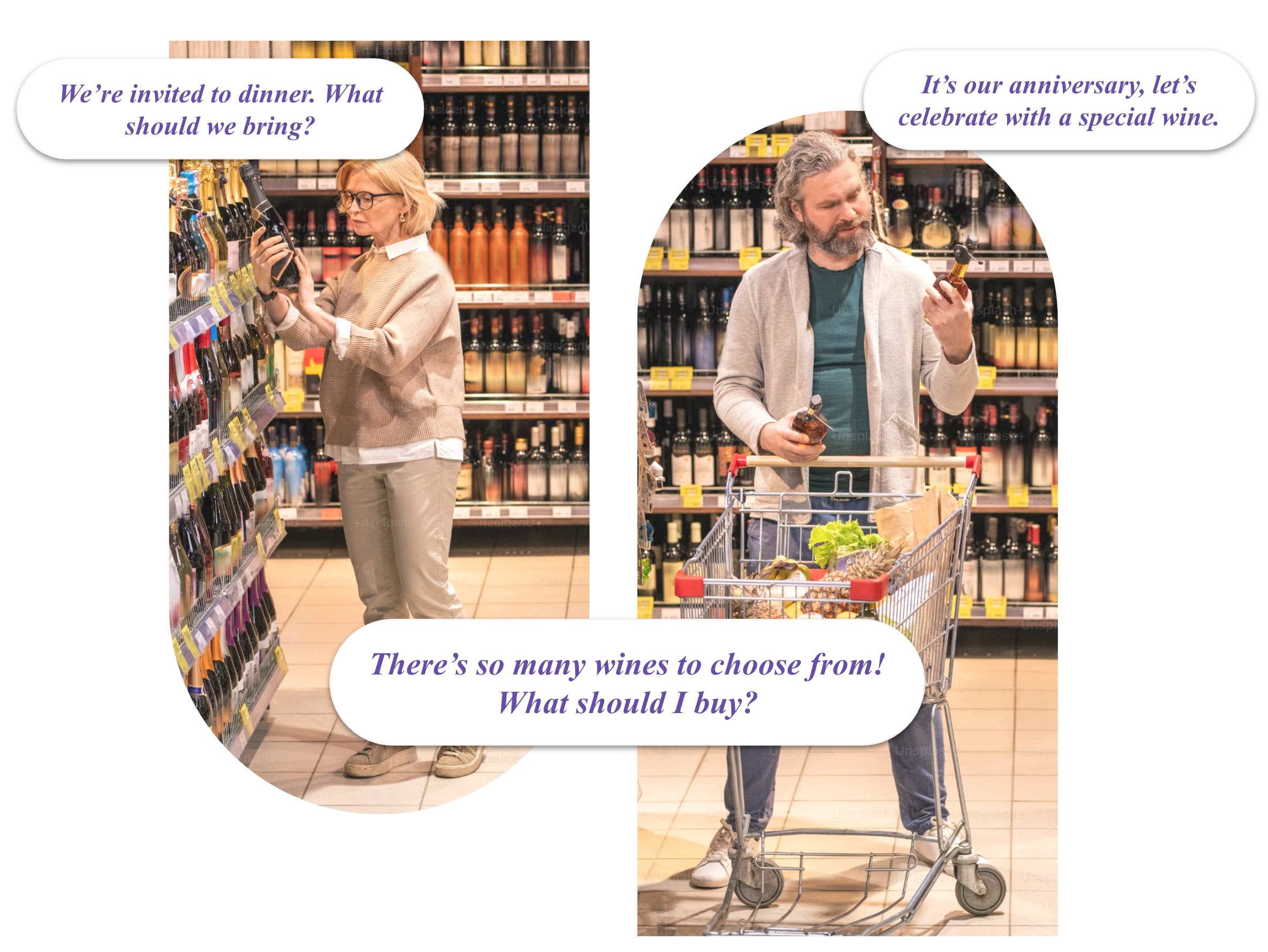
Psychologically, the abundance of choice forces the brain into overdrive. The consumer has to evaluate and compare different wines, considering labels, regions, grape varieties, and prices. Cognitive overload sets in as the mind struggles to sift through all the variables. Instead of feeling in control, the customer may feel paralyzed, unsure of what to choose. In this situation, many people will opt for the easiest decision-making strategy: grabbing a familiar bottle or the one with a high rating, even if it may not be their favorite. Others may feel anxious about making the "wrong" choice, leaving them less satisfied with their purchase regardless of the outcome. In extreme cases, the sheer number of choices can cause decision fatigue, leading customers to leave the store empty-handed. Ultimately, while variety is appealing, the psychology of too much choice can hinder our ability to make satisfying decisions, turning a seemingly simple task, like choosing a bottle of wine, into a stress-inducing experience.
Please consume alcohol responsibly.
©2024 trendydots.com All rights reserved.
Made with ❤️ & ☕ in 🇦🇹 Austria